
Beauty trends get loud fast. But under the hype, 2026 has a clear “grown-woman” vibe: calmer skin, smarter treatments, and routines that don’t punish you for having a life.
This guide breaks down the trends that actually translate into better skin, better body confidence, and fewer “why did I do that?” moments.
No fluff. No 18-step routines. Just the direction the industry is moving—and how to use it at Karma Seven in Plantation.
What defines the “2026 approach” to beauty?
2026 beauty is less about chasing a single “perfect look” and more about building skin and body results you can maintain: barrier-first skincare, collagen support, calmer inflammation, and treatments that work with your biology instead of fighting it. The shift is noticeable: fewer aggressive experiments at home, more intentional in-spa care, and a bigger focus on long-term consistency over quick shocks.
What that means for real women (not internet robots):
- You’re aiming for “healthy and consistent,” not “perfect for two days.”
- You’re choosing treatments you can repeat safely and predictably.
- You’re building a plan that fits your schedule, budget, and tolerance for downtime.
- You’re paying more attention to stress, sleep, and inflammation because they show up on your face.
If you’ve been bouncing between products and random facials hoping something “clicks,” 2026 is your permission slip to get strategic.
Which trend matters most if you want real results?
If you do one thing differently in 2026, make it this: stop treating your skin like it’s a problem to solve and start treating it like a system to support. That usually means prioritizing barrier health, collagen support, and professional guidance when you’re stuck—because consistency beats intensity in the real world.
A simple decision rule (that saves a lot of money):
- If your skin is irritated, reactive, or breaking out easily: barrier-first “skin calm” wins.
- If your main complaint is texture, pores, scars, fine lines: collagen-building treatments (like RF microneedling) become the backbone.
- If your face looks “tired” even when you’re doing everything: stress + sleep + circulation support (massage, reset treatments, fewer inflammatory triggers) matters more than another serum.
And if you want help mapping this to your actual skin (not generic advice), start by book your appointment today so you’re not guessing in circles.
What is regenerative skincare and why is everyone chasing it?
Regenerative skincare is the trend toward treatments and ingredients designed to support the skin’s repair processes—think “rebuild and strengthen,” not “strip and over-stimulate.” In 2026, the conversation is moving away from harsh cycles of damage-and-recover toward controlled stimulation and better recovery support.
What “regenerative” looks like in practice:
- Collagen signaling: treatments that encourage your skin to produce more supportive structure over time.
- Better recovery: calmer post-treatment protocols, gentler exfoliation choices, and less “burn it off.”
- Professional revival: more women returning to in-clinic care because at-home experimentation hit its limit.
How to use this trend without falling for hype:
- Choose one collagen-building lane (not five).
- Plan treatments in a series (because biology doesn’t do “overnight miracles” on command).
- Pair stimulation with barrier support, hydration, and sun protection so your results last.
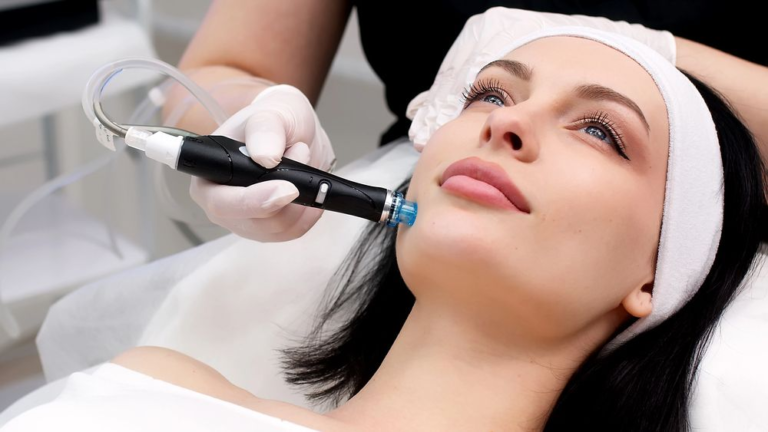
At a med spa level, this trend pairs naturally with collagen-focused services. If you’re exploring skin tightening or texture improvement, it’s worth learning how RF microneedling fits into a modern “rebuild” plan.
Start your 2026 plan instead of collecting more products
You don’t need another random serum with a cute label. You need a plan that matches your skin, your schedule, and what you actually care about when you look in the mirror.
At Karma Seven, we help you choose treatments that build results over time—without wrecking your barrier or leaving you guessing.
If you’re tired of trial-and-error, let’s map out your smartest next steps for 2026.
You’ll walk out knowing what to do, what to skip, and what will actually move the needle.
Use book your appointment today and we’ll take it from there.
Why is “skin calm” replacing “skin glow” in 2026?
Because the beauty world finally admitted what real people learned the hard way: an inflamed, over-exfoliated barrier can look shiny, but it won’t look healthy—and it definitely won’t behave. In 2026, barrier protection and reduced irritation are center stage, with more attention on ingredients and routines that support resilience (not constant peeling).
What “skin calm” usually fixes:
- Redness that keeps returning
- Tightness after cleansing
- Random sensitivity that wasn’t there before
- Breakouts that feel “angry,” not just clogged
- That dull, stressed look that makeup can’t fully hide
Practical “skin calm” moves that work:
- Simplify actives: fewer acids, fewer “strong” nights, more consistency.
- Barrier lipids matter: ceramides are a major barrier-support category right now for a reason.
- Treatments should match your stress level: if your nervous system is fried, your skin often shows it.
If your skin is reactive, the most 2026 thing you can do is stop attacking it. Start rebuilding. And yes—your glow usually comes back after the calm.
What does longevity skincare mean in real life?
Longevity skincare is the shift from “erase every line” to “keep skin functioning well for as long as possible.” That means protecting your barrier, reducing inflammation, supporting collagen, and being smart about sun exposure and recovery. It’s less about dramatic one-time fixes and more about building a maintenance rhythm you can actually sustain.
Longevity skincare usually includes:
- Prevention: consistent SPF, steady hydration, gentle exfoliation.
- Collagen support: controlled stimulation (not constant irritation).
- Lifestyle support: sleep, stress, and circulation—because your skin isn’t separate from your life.
This is where pairing facial care with body care matters. You can do the best facial on earth, but if you’re tense, not sleeping, and running on stress hormones, your glow becomes fragile. That’s why longevity plans often include services like massage alongside skin treatments—because your face is attached to your nervous system.
Why are more women choosing collagen-building treatments over harsh fixes?
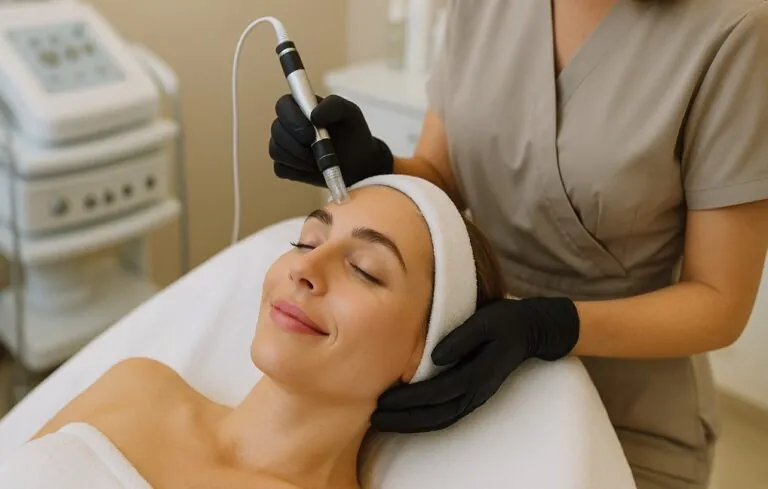
Because collagen-building treatments are the “quiet compounding” of aesthetics: slower, steadier improvements that look natural and age well. Instead of chasing instant intensity, 2026 leans into controlled stimulation (like RF-based tightening) that supports firmness and texture over a series—often with less downtime than more aggressive approaches.
A quick reality check on RF-based tightening:
- Radiofrequency treatments use controlled heat to stimulate collagen and elastin deeper in the skin.
- Results tend to be gradual and cumulative.
- The “best” outcomes come from a plan: series + maintenance + good aftercare.
If you’re exploring this trend, anchor it to a real goal:
- Texture and pores
- Fine lines
- Mild laxity
- Acne scarring
- Overall firmness
And if body confidence is part of your 2026 plan, the same “build, don’t punish” philosophy shows up in body contour conversations too—especially with tech-forward treatments like T-Shape 2.
How are med spas blending wellness with aesthetics in 2026?
In 2026, the best med spa experience doesn’t feel like a factory line—it feels like a reset. The industry is leaning harder into nervous-system support (stress reduction, relaxation, recovery) because it directly impacts skin: inflammation, breakouts, dullness, and even how well you recover from treatments.
What this looks like at the client level:
- You’re not just “getting a facial.” You’re creating a rhythm of care.
- Treatments are chosen based on how your skin behaves, not what’s trending on TikTok.
- Recovery is treated like part of the treatment (because it is).
Ways to build this trend into your routine:
- Pick one monthly “anchor” (facial or massage).
- Add one targeted “project” (texture, pigmentation, firmness) in a treatment series.
- Reduce the chaos in your home routine so your professional results don’t get undone.
If you’re the type who wants structure, a membership-style routine can make that easier—especially if your goal is to stay consistent without re-deciding everything every month. (That’s where options like a spa membership can be a practical 2026 move.)
What does “beauty from within” actually change?
“Beauty from within” is the trend toward treating skin outcomes as the result of multiple systems: inflammation, stress response, gut comfort, sleep quality, and circulation. It doesn’t mean skincare doesn’t matter—it means skincare works well when your body isn’t constantly in fight-or-flight mode.
What this changes in real decisions:
- If you’re chronically stressed, your “best product” might be a consistent reset ritual.
- If your skin is inflamed, your plan should include calming inputs (not more stimulation).
- If your glow disappears when life gets busy, your routine needs to get simpler—not more complex.
This is also why massage keeps showing up in modern beauty conversations: improved relaxation and circulation support can make your skin look less “tight” and more alive—especially when you’re doing collagen-building work too.
How do you build a 2026-ready plan at Karma Seven?
A good 2026 plan is simple on purpose: one core lane, one support lane, and a schedule you can keep. The goal is progress you can feel and see—without needing to overhaul your life or live in the treatment room.
Here’s a clean framework you can use:
Step 1: Choose your primary goal (pick one)
- Calm sensitivity and restore barrier
- Improve texture/fine lines/firmness
- Brighten and even tone
- Body confidence and contour support
Step 2: Choose your anchor service
- Monthly or seasonal facial for skin rhythm
- Regular massage for stress + recovery support
- A targeted series like RF microneedling for collagen-building goals
- A body-focused plan using T-Shape 2 if contouring is part of your 2026 intentions
Step 3: Remove the “routine clutter”
- Keep your home routine consistent for 6–8 weeks before changing anything major.
- Don’t stack five new actives and blame your face when it panics.
Step 4: Decide on consistency support
- If you always “mean to book,” but don’t—consider a spa membership structure so you actually show up for yourself.
The best trend for 2026 is not guessing anymore
Trends are fun, but results are better. If you want 2026 to be the year you stop bouncing between products and start building visible progress, Karma Seven can help you make it simple.
We’ll talk through what you want to change, what your skin can realistically tolerate, and what sequence makes the most sense.
No hype language. No pressure to do everything. Just a plan you can stick to.
Start with book your appointment today and come in with your questions—this is what we do.
Summary
- 2026 beauty is moving toward barrier health, controlled collagen support, and routines that are sustainable.
- “Skin calm” matters because inflammation and barrier damage sabotage almost every other goal.
- Collagen-building treatments like RF-based tightening work best as a series with good recovery support.
- Wellness and aesthetics are merging because stress and sleep show up on your skin.
- The smartest 2026 plan is simple: one goal, one anchor service, and consistency.
FAQs: Skin & Beauty Trends for 2026
What are the biggest skincare trends for 2026?
The biggest 2026 trends center on healthier skin function: barrier repair, gentler exfoliation, collagen-supporting treatments, and more professional guidance instead of constant at-home experimentation. The “theme” is long-term resilience—skin that stays calm, strong, and consistent, not just temporarily glowy.
Is RF microneedling worth it for texture and fine lines?
It can be, especially if your goal is gradual improvement in texture, pores, and fine lines with a series-based plan. RF microneedling combines controlled stimulation with deeper collagen signaling, which is why results build over time rather than overnight. A consultation helps match expectations to your skin and your tolerance for downtime.
Why is my skin suddenly sensitive to products I used to tolerate?
Often it’s barrier stress: too many actives, too much exfoliation, seasonal dryness, or general inflammation from stress and lifestyle shifts. When your barrier is compromised, products that were “fine” can sting or trigger redness. The fix is usually simplification and barrier support before you reintroduce stronger ingredients.
What’s the difference between a day spa and a med spa?
A day spa typically focuses on relaxation and traditional services like massage and many facial experiences, while a med spa includes more advanced aesthetic treatments designed to target specific skin or body concerns. Many modern spaces blend both so you can pair results-driven care with a calmer, wellness-forward experience. (Karma Seven offers both sides of that experience.)